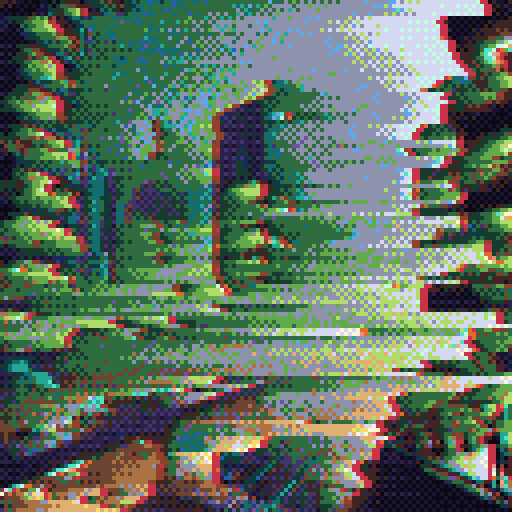
ReLeaf, an initiative dedicated to environmental sustainability and community empowerment, blends creativity and practicality to imagine a better world. By integrating fiction with real-world action, ReLeaf crafts a compelling vision for a sustainable future while acknowledging the challenges of today.
Imagining Sustainable Futures: Vertical Gardens
One of ReLeaf's most innovative approaches is its visionary take on vertical gardening. These gardens are not just spaces for growing fresh produce but are also infused with storytelling and imagination. By tapping into the power of narrative, ReLeaf engages communities and turns vertical gardens into living works of art. These gardens enhance urban environments with beauty and nature, while promoting sustainable living.
Acknowledging Real Impact: Life Story Metadata
While ReLeaf thrives on creative vision, it also values the importance of accountability. Each vertical garden comes with Life Story metadata that credits the individuals, communities, and organizations involved in its creation and upkeep. This practice fosters collaboration, shared ownership, and transparency in all initiatives.
Inspiring Action through Fiction
By embracing fiction, ReLeaf invites people to dream and imagine a better future—one centered on sustainable practices and community empowerment. This imaginative approach sparks creativity, optimism, and action, encouraging people and communities to become part of the solution.
Grounded in Reality: Facing Challenges Together
At the same time, ReLeaf recognizes the complexity of real-world issues. From environmental challenges to socioeconomic disparities, the path to sustainability requires collaboration, investment in technology, and the empowerment of marginalized communities. By combining fiction and reality, ReLeaf offers a holistic approach to sustainability—one that motivates action while staying grounded in the challenges we face today.
Cooperative Ownership: Sharing the Benefits
ReLeaf’s commitment to sustainability extends beyond gardening. The cooperative ownership model ensures that profits from these initiatives are shared among businesses and worker members. This helps address wealth inequality by creating income-generating opportunities and providing individuals with a sense of ownership and agency.
Conclusion: Cultivating a Sustainable Society
ReLeaf exemplifies the power of merging fiction with reality to drive meaningful change. Its creative vision for a sustainable future inspires communities to act, while its commitment to collaboration and recognition ensures that everyone is part of the solution. Through innovative design and cooperative ownership, ReLeaf is not just growing vertical gardens—it’s cultivating a more equitable and sustainable world.
🚮 W.A.S.T.E.: Words Assisting Sustainable Transformation & Ecology
| Term | Definition |
|---|---|
| Adaptive Reuse | A building that outlived its first job and took a second one. The Independent was luxury condos, and then, after the drought years, three floors of mushrooms on the offsets, and by 2034 nobody called it anything but the Stack. |
| Cooperative | You keep eleven gardens and none of them are yours. They belong to the people whose walls they grow on, and you split what they make. ReLeaf pays a little for the carrying. |
| Copy That | A seed scattered rather than stored. Copying with acknowledgment is a gift economy: you credit the original, then you copy it, and the method outgrows its makers on purpose. Also called Scalable Sustainability. |
| Grackleclock | The grackles go down to the creek at first light and an hour before dusk, and come back oldest first. Set your day by it. The one with half a tail always takes the top. |
| Immigration | Diego came to Austin with one bag and three languages and picked up two more in the line for water. In the Camp the children chalk a hopscotch grid where the trucks used to idle. |
| Literary Criticism | Where the books get answered. Pynchon, Atwood, Vinge, Hofstadter, Eliot, and a hundred pages of what a garden would say back. |
| Neon Spores | A flyer from 1983: bands nobody has heard of, Octavia Butler listed as keynote, a coffee ring on the edge. Either a festival that happened or an infection that spreads like pollen. The archive does not say which. |
| Organic Media and Fiction | Stories and songs made to be copied by hand, repaired, and let go. Each one is tied to a planter, a wall or a bench somewhere in the city. |
| ReLeaf | The cooperative that keeps the gardens, the stories and the van. Nora Sanchez started it, and whoever tends it owns a share. The name is a leaf turned over. |
| Rootroom | The chamber you imagine under your feet. No floor, walls of breath and time, deeper than any court or agency or failed system. Root there before you answer the letter. |
| Seaholm | The old power plant on the lake. It has not made electricity in decades and runs anyway: the instruments say it is off the grid, and the phones in the turbine hall charge faster. By 2035 it is a fermentation school, and the concrete smells like toast. |
| Threadglow | A low vibration underfoot when the mycelium network recognizes you, and a faint light on the footbridge that follows your step. It is not an alert. It says: here you are. |
| Urban Greening | The quiet reclamation of concrete by leaf and root. They pull up the parking lots one by one, and the bridges start to breathe. |
| Waste Integration | Nothing is sent away. Crushed glass goes to the trellis shop on Aldrich, bike tubes to the woman who makes them into hinges, cardboard to the cube makers. The van goes that way anyway. |