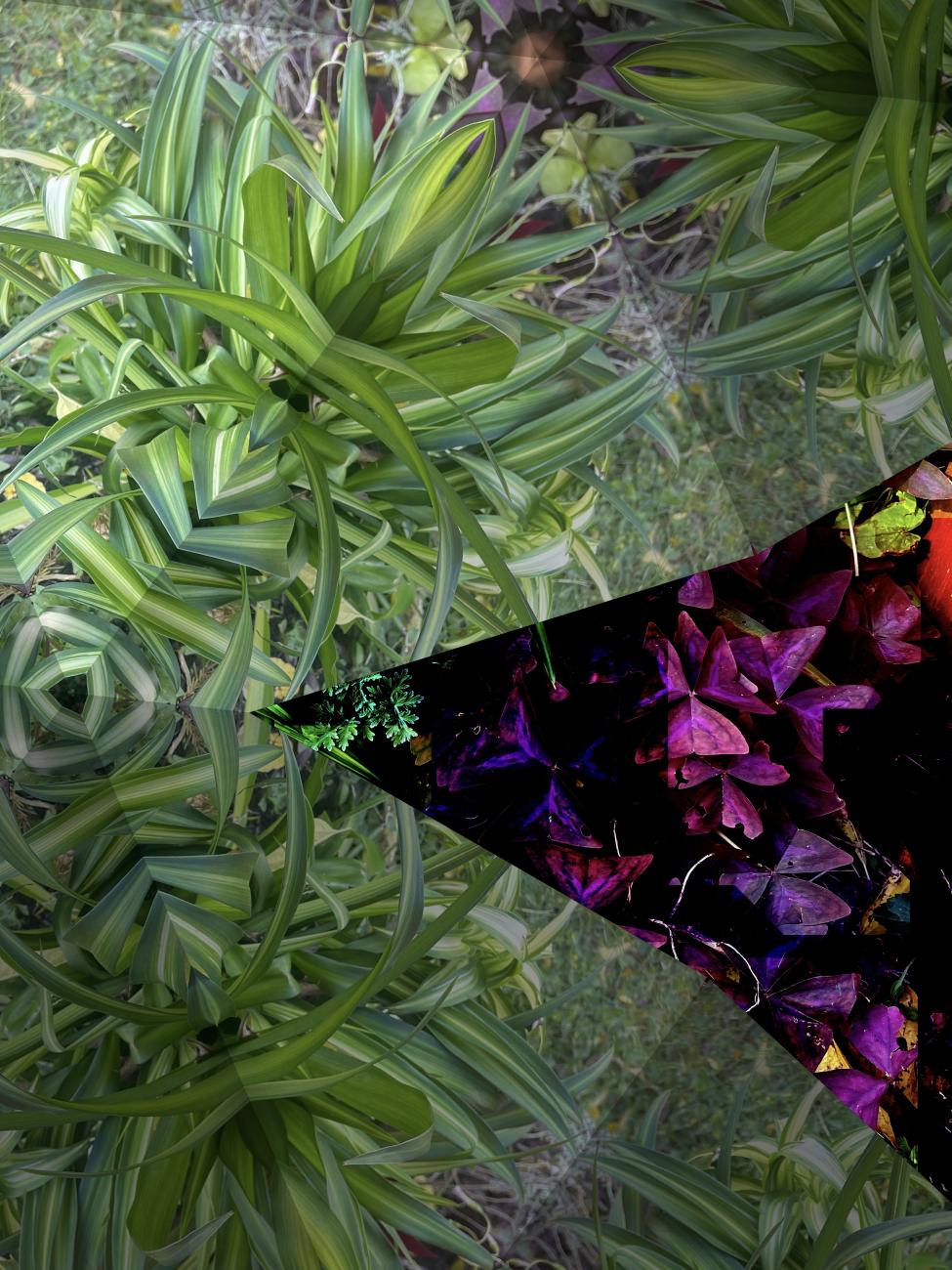
The broadcast reached farther east than anyone at Central had guessed. Out past the rail yards, where the city thinned into creek bottom and pecan and the houses stood far apart, people who had stopped answering knocks on the door began, in the evenings, to turn on their radios.
In a reclaimed house near Boggy Creek, Eli, an aging lighthouse keeper, ran a one-man operation.
He had kept the light at Port Aransas for thirty-one years, until the storms took the dune and the Coast Guard took the lamp, and he had come inland with a duffel bag, a cat who had since died, and the lens assembly from the old light, which he had paid a man in Rockport four hundred dollars to remove and drive up I-37 in a borrowed truck. It sat in his front room now, eight feet of brass and prism, catching the morning. He grew okra and peppers and kept a log of every bird that came to the water dish. The log was the only thing he still wrote in.
He found Central by accident, sweeping the dial for weather. A woman was reading a list of seed swaps. Then a man was arguing, gently, about whether it was right to eat lightning bugs. Then the signal went quiet, as if something had landed on it.
He listened the next night, and the next. He wrote the times of the broadcasts in the bird log, between a pair of cardinals and a red-shouldered hawk. He found that he was waiting for the eleven minutes the way he used to wait for the ships' lights to come up out of the dark: not because he needed them, but because it mattered that someone was out there doing the same thing at the same time.
On the fourth night the man who argued said, If anyone is listening east of the highway, we'd like to know you're there.
Eli sat with that for a long time. On the shelf the radio hissed. Someone had put on Twin Dragoon's "Hidden in Brightness," and the slow chords came through thin and scratched, like music from a passing car.
In the morning he oiled the hinges on the gate he hadn't opened since spring, packed bread and a thermos and the bird log, and set out walking west along the creek, toward the building he had only ever heard.
⁂ A thread in the Thin Season.
Frequency Central · 5 of 18 · ← Frequency of the Fireflies · The Great Project’s Serendipities →
🚮 W.A.S.T.E.: Words Assisting Sustainable Transformation & Ecology
| Term | Definition |
|---|---|
| Bat Weather | Practice of local repair, reuse, mutual care, and shared access. People use scrap, skills, and trust to keep each other safe and resourced when official systems fail. |
| Beekeepers | Custodians of fragile bandwidth ecologies, tending to the hum of shared consciousness the way others tend hives, stabilizing swarm-signals before they collapse into noise. |
| Echo Lanterns | Paper moons that carry voices from past and future, glowing with unspoken memory. |
| Eva Marquette | A brilliant strategist and field operative driven by conviction more than faith. Once a scientist within ReLeaf, Eva turned rebel after uncovering The Gardener’s manipulation of bioengineered ecosystems. Focused, sharp, and quietly defiant, she balances intellect with intuition, often serving as Langley’s moral compass and tactical equal in the fight to reclaim Future Austin’s freedom. |
| Fort Branch | Nestled in East Austin, Fort Branch is a lesser-known but equally important waterway that contributes to the city’s ecological and community landscape. Unlike its more renowned neighbors such as Waller Creek and Shoal Creek, Fort Branch often flies under the radar. However, this should not diminish its significance. The area has been the subject of various improvement projects, aimed at enhancing both its natural ecosystem and its accessibility to the public. Serving as a sanctuary for local wildlife and a peaceful retreat for residents, Fort Branch is an underappreciated treasure that warrants greater recognition and appreciation. |
| Future Austin | Future Austin invites you to explore a luminous vision of the city’s tomorrow—where imagination and reality intertwine to create a thriving, sustainable urban landscape. Here, grassroots ingenuity and cutting-edge technology power communities, transforming Austin into a place of boundless possibility. Through insightful articles and evocative Organic Fiction, you’ll glimpse futures shaped by innovators like ReLeaf, whose bold strategies—such as Vertical Garden Fairs in schools—seed green revolutions in unexpected places. From unconventional movements like Trash Magic reimagining music distribution, to fictional worlds alive with unseen energy and harmony, this collection offers both practical inspiration and immersive storytelling. Whether you’re drawn to actionable sustainability or simply wish to lose yourself in tales of a resilient, radiant future, Future Austin points toward the city we could create—and the one we must. |
| Lantana | Lantana is a genus of about 150 species of perennial flowering plants in the verbena family, Verbenaceae. They are native to tropical regions of the Americas and Africa but exist as an introduced species in numerous areas, especially in the Australian-Pacific region, South and Northeastern part of India. The genus includes both herbaceousplants and shrubs growing to 0.5–2 m (1.6–6.6 ft) tall. Their common names are shrub verbenas or lantanas. The generic name originated in Late Latin, where it refers to the unrelated Viburnum lantana. The Soliga, Korava and Palliyar tribal people of the MM Hills in southern Karnataka, India use lantana to produce roughly 50 different products. It is considered a "near match" to highly priced alternatives, cane and bamboo. Furniture made from lantana is resistant to sun, rain, and termite damage. |
| Lumen | An analytic voice of the city’s hidden archives, precise and skeptical, always measuring probabilities yet unable to resist being drawn into the impossible glow of unfolding stories. |
| Mintstep | The clean snap of scent released by the mint between the pavers along the creek. It signals steady footing and readiness to help. |
| Mutation Ethic | The principle that change through adaptation is not error but evolution, guiding innovation like a genetic code. |
| Mycoremediation | The practice of enlisting fungi as silent custodians, their branching mycelial webs breaking down toxins, filtering waters, and stitching damaged ecologies back into balance. |
| Neon Spores | Fictional festival or real infection, a cultural bloom that disperses memory like pollen, seeding futures that never officially happened. |
| Organic Media and Fiction | The rapid pace of urbanization and its environmental impact has inspired various speculative genres in literature and media. Organic Media and Fiction, a recent addition, offers a refreshing counter-narrative to dystopian futures, focusing on optimistic, sustainable societies powered by renewable energies. ReLeaf, an Organic Media and Fiction-inspired platform, epitomizes this genre by blending reality with narratives that envision a world where humans coexist harmoniously with nature and technology. ReLeaf's ethos is rooted in the belief that a hopeful future of sustainable living is not just an ideal but a reality. It combines engaging storytelling, visual arts, and direct action to showcase the possibilities of an Organic Media and Fiction future. By merging immersive narratives with tangible solutions, ReLeaf serves as both a creative outlet and a catalyst for change. The narratives in ReLeaf are set in cities that integrate renewable energy and green technology into their architecture, infrastructure, and daily life. From urban gardens atop skyscrapers to solar-powered public transport, these stories offer a glimpse of future urban landscapes grounded in existing technologies and practices. They provide an encouraging perspective on how our cities could evolve by amplifying sustainable practices we are already exploring. ReLeaf's stories feature diverse, inclusive, and community-oriented societies, emphasizing social justice, community empowerment, and equitable resource distribution. These narratives reflect societal structures that could foster a balanced coexistence, highlighting the importance of these values in creating a sustainable future. Beyond storytelling, ReLeaf engages in direct action, promoting real-world initiatives that echo Organic Media and Fiction principles. By supporting community-led renewable energy projects and sustainable urban farming, ReLeaf bridges the gap between the Organic Media and Fiction vision and our present reality, making the dream of a sustainable future feel achievable. ReLeaf broadens the understanding of the Organic Media and Fiction genre by presenting a balanced blend of reality and narrative. It underscores that Organic Media and Fiction is not just a literary genre or aesthetic movement, but a lens through which we can view and shape our future. The Organic Media and Fiction vision put forth by ReLeaf invites us to imagine, innovate, and create a future where sustainability is the norm. By intertwining fiction with reality, it presents Organic Media and Fiction as a plausible future, offering a hopeful counterpoint to narratives of environmental doom. ReLeaf helps us believe in—and strive for—a future where humans live in harmony with nature and technology. |
| Praisivores | Engineered flora that metabolize attention and exhale ornament while training caretakers to keep clapping. |
| Sara Stevenson | I'm a middle school librarian, and I first saw a free little library up in Seattle this summer. l've seen them popping up around town and told my husband I would love him to make me one. Never did I imagine he would produce such a fine piece of woodwork and construction, a mini replica of our house. Now I can be a 24-hour librarian. |
| Tradescantia pallida | Tradescantia pallida is a species of spiderwort native to the Gulf Coast region of eastern Mexico. The cultivar T. pallida 'Purpurea' is commonly called purple secretia, purple-heart, or purple queen. Edward Palmer collected the type specimen near Ciudad Victoria, Tamaulipas in 1907. Tradescantia pallida is an evergreen perennial plant of scrambling stature. It is distinguished by elongated, pointed leaves - themselves glaucous green, sometimes fringed with red or purple - and bearing small, three-petaled flowers of white, pink or purple. Plants are top-killed by moderate frosts, but will often sprout back from roots. The cultivar T. pallida 'Purpurea' has purple leaves and pink flowers. Widely used as an ornamental plant in gardens and borders, as a ground cover, hanging plant, or - particularly in colder climates where it cannot survive the winter season - houseplant, it is propagated easily by cuttings (the stems are visibly segmented and roots will frequently grow from the joints). Numerous cultivars are available, of which 'Purpurea' with purple foliage has gained the Royal Horticultural Society's Award of Garden Merit.
Support this species by reading about it, sharing with others, and donating monthly or yearly to the ReLeaf Cooperative in honor of Tradescantia pallida. We deliver any quantity of these, for free, to any ReLeaf site (Free Little Library or other suggested location in the Shoal Creek, Waller Creek, and Fort Branch watersheds). We are currently seeking cooperative members in Austin and beyond to cultivate and provide Tradescantia pallida and other species for free to ReLeaf sites in their local watersheds. Inquire by email: bryceb@releaf.site. Thanks! |
| WasteSpeech | The civic practice of treating waste as a living language that can be composed, read, and performed. |