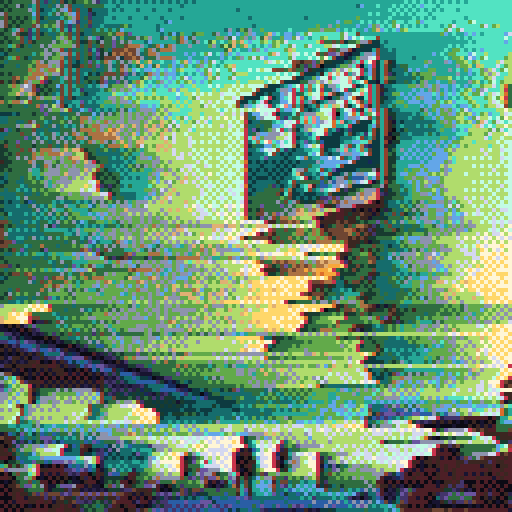
In the not-so-distant future, Austin has experienced a remarkable transformation. Once dominated by towering billboards screaming for attention, the city’s urban landscape now tells a different story. These once-commercial structures have been repurposed, adorned with vertical gardens that showcase vibrant greenery, bringing nature's beauty into the heart of the city.
A team of urban archaeologists stumbles upon a peculiar billboard during their survey. This billboard, unlike the others, still bears remnants of an old advertisement. A captivating photograph of an intense-looking individual is paired with the bold slogan, “The Attorney That Rocks!”
Intrigued, the archaeologists engage in a lively debate about the ad’s original purpose. Some speculate that it was targeting individuals with equally intense personalities who might have needed legal representation from someone with a dynamic and unconventional style. They argue it was a daring marketing move aimed at those seeking a passionate advocate.
Others in the group question the effectiveness of such broad outreach. In an age dominated by personalized marketing and direct engagement, they wonder why the attorney didn't opt for more precise methods to reach potential clients. To them, the idea of broadcasting a message to the masses feels inefficient in a world where communication has become so targeted.
As their conversation deepens, they begin to reflect on the evolution of advertising itself. The preserved billboard, juxtaposed against the vibrant vertical garden, becomes a symbol of the past, provoking questions about the changing nature of communication. Was the attorney making a bold statement about their approach to the law? Were they trying to capture the attention of clients seeking a fierce advocate for justice? Or was the message, like the billboard, simply a relic of a bygone era?
The mystery of “The Attorney That Rocks!” is more than just a curious find; it sparks reflection on the delicate balance between reaching a wide audience and crafting a message tailored to the individual. As the archaeologists continue their work, they are left wondering what other secrets the city holds within its transformed streets—where human ingenuity and the beauty of nature now intertwine.
🚮 W.A.S.T.E.: Words Assisting Sustainable Transformation & Ecology
| Term | Definition |
|---|---|
| Anemone | A writer at Vintage. She touched a railing without noticing, and the iron warmed. She tends to hear the question under a story before the story is finished. |
| Bottle Oracle | A bottle of Strawbactus wine that will tell you what next year tastes like, if you wait. It does not hurry. |
| Creekback | The tap at your ankles when the ripple comes back upstream, like someone knocking from another room. You knock back by standing still. |
| Creekside Testament | A postcard tucked into a paperback about trains and distance, in a Little Free Library on the way to Clarksville. On the back, in faint writing: The creek remembers. |
| Ephemeral Art | Made to be gone: a ring of leaves on the creek, a wall of cardboard cubes that will not see the winter. Andy Goldsworthy’s trade, and the city’s for an afternoon. |
| Floor 1 | The first floor of Central. Two grand doors face you: one carved with rivers and creeks, one with book spines, bookmarks and paper leaves. Past them, the plants. Pick one. |
| Future Austin | Austin, a few decades on: the same creek, the same bridge at dusk, a few more vines than the zoning allows. Everything here happens to people who are trying, and are not always right. |
| Geometron | A way of describing the world as shapes you can draw with a compass and a straightedge, and build from what other people throw away. Also a book of the same name by Trash Robot, passed hand to hand in the city until its cover went soft as cloth. Mina found one on the returns cart at Central and read it standing up. |
| Library | Central’s oldest name, and the one people still use. The building at the confluence where the city keeps what it decided it could not do without. A black cat sleeps on the sill above the returns slot. |
| LifeThread | The strand sewn into every object, linking where it came from, who used it, and what they said about it. The silver cube arrived without one, and a whole plaza tried to give it a lineage. |
| Organic Media and Fiction | Stories and songs made to be copied by hand, repaired, and let go. Each one is tied to a planter, a wall or a bench somewhere in the city. |
| Paper Lantern Weather | The weather on the nights the paper lanterns go up: light hanging in fragile things, swaying between celebration and remembrance. A woman under the Congress Bridge carries one made of grocery paper and inked wishes, and waits for a footpath that only opens when enough people need it. |
| Prison Abolition | In the prison library Ellis folded a cardboard hypercube and read Geometron aloud, one page a night, to a man ashamed that he could not read well. Callum got out in 2031 with sixty dollars, a bus ticket, and the cube. |
| Public Art | An owl cut from endless bands of metal stands across from the Central Library, a sculpture made from all the leftover hours. People pass it carrying something they would rather set down. |
| RootFounders | The first cohort of ReLeaf, scattered now. In the rehearsal years, when the first gardens were being tuned on rooftops and bus stops, they staged concerts with soda tabs for cymbals and mulch for reverb. |
| Silver ponysfoot | Dichondra argentea, a silver groundcover that roots wherever it touches the ground. Gardeners plant it at the base of a cutting so that, years later, you can tell where the plant came from. |
| The Attorney That Rocks | A billboard slogan the archaeologists find under the vines: an intense face and the words The Attorney That Rocks. They argue for a long time about what it was for. |
| Upcycling | Making a thing better than it was by making it into something else. In the city it stopped being a word anyone said aloud; it became the ordinary way of doing things. A sparkling-water can now holds creek gravel, a succulent, and some fossils that did not comment. |
| Urban Greening | The quiet reclamation of concrete by leaf and root. They pull up the parking lots one by one, and the bridges start to breathe. |