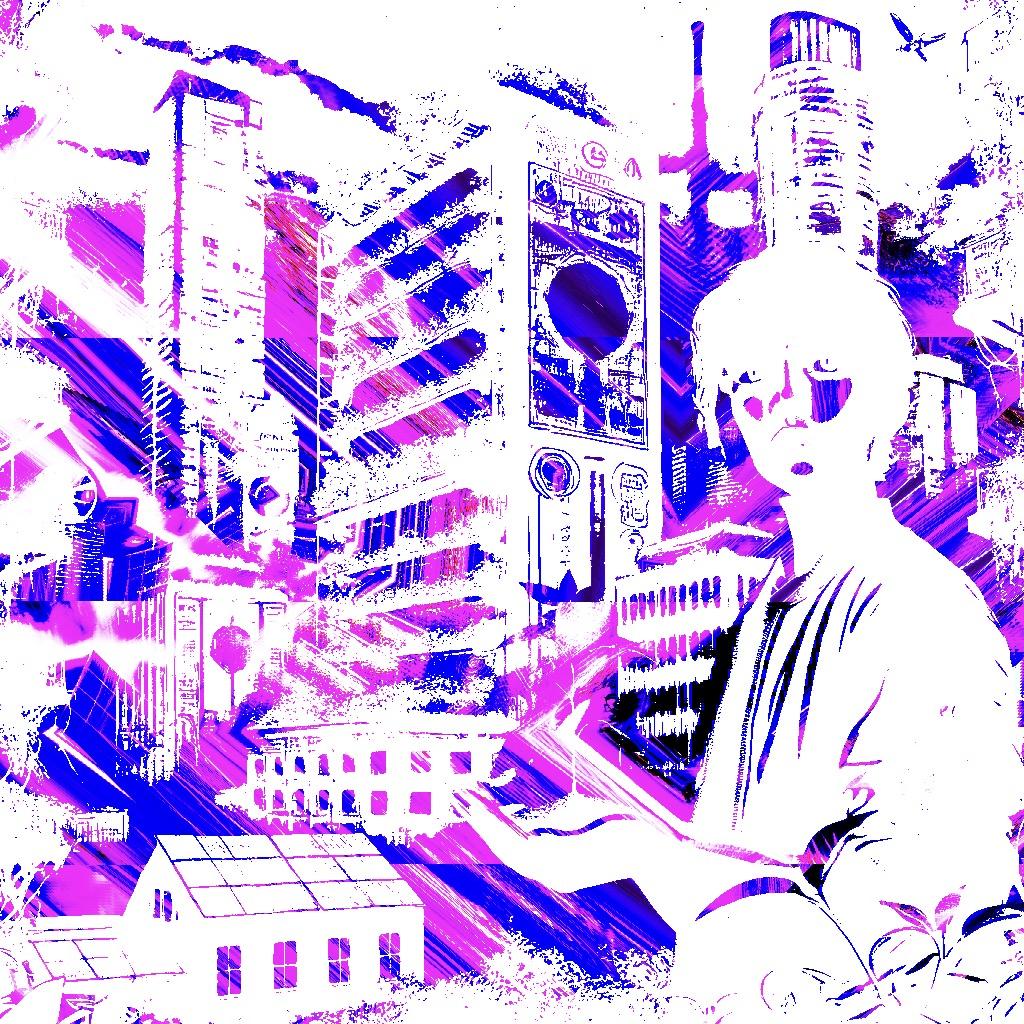
In the vibrant, eco-conscious future of Austin, Miguel, a young immigrant with a knack for vertical farming, is quickly becoming the city's unspoken hero for the climate-displaced. His farming venture is thriving, but it's his advocacy for green rights that makes him stand out—a champion not just for his crops but for the voiceless.
But the plot thickens: state legislators are cooking up a plan to limit Austin's support for climate refugees. They claim the influx is straining the economy, hogging jobs. This hits Miguel right where it hurts. He’s been down that road, arriving in Austin as a climate refugee himself.
Never one to shy away from a challenge—especially when bureaucracy starts looking a little too smug—Miguel, armed with his signature charm and a well-timed wink, launches a full-fledged awareness campaign. With his flourishing business as the backdrop, he shares his personal story, shedding light on the uphill battles climate refugees face daily.
Then comes the twist. Miguel manages to snag a meeting with the Governor himself. The grandeur of the State Capitol is nothing new, but Miguel brings something unexpected to the table—or, rather, to the Governor’s desk. A small, simple box. Inside? A sapling, grown from seeds in his very own vertical farm.
“The gift of growth, Governor,” Miguel says with that disarming grin of his. “This sapling needs just the right environment to thrive—just like the people you're trying to keep out. They’re not asking for the world. Just a chance.”
The Governor stares at the sapling, then at Miguel. What follows is a lively debate, Miguel passionately pitching his grand plan: green jobs for climate refugees, sustainable food systems, and an economic boost for the state.
Word spreads fast, as it always does when Miguel’s involved. Media outlets can’t get enough of the story. His gift to the Governor is more than a symbol; it’s a living metaphor for what Austin—and the world—could become if it nurtured growth rather than stifled it.
Now, as the government deliberates, the city waits. But one thing’s certain: Miguel has planted the seeds of change, and he’s not going anywhere until they bloom.
🚮 W.A.S.T.E.: Words Assisting Sustainable Transformation & Ecology
| Term | Definition |
|---|---|
| Anti-Time Picnic | An invitation dated 1987, in block type: Bring only what isn’t yours but feels familiar. It was in a box under a laundromat, next to a flyer for Neon Spores. |
| Circular Economy | Nothing leaves; it changes hands. In 2045 money has turned into rings, like a tree has, one for each year of rain. You offer a story and a ring goes out. You need a wrench and a ring comes back. |
| Ephemeral Art | Made to be gone: a ring of leaves on the creek, a wall of cardboard cubes that will not see the winter. Andy Goldsworthy’s trade, and the city’s for an afternoon. |
| Ferment Mirage | The week the Strawbactus stops being juice and has not yet become wine. The jar breathes, the room smells like something you used to know, and no one opens it. |
| Geometron | A way of describing the world as shapes you can draw with a compass and a straightedge, and build from what other people throw away. Also a book of the same name by Trash Robot, passed hand to hand in the city until its cover went soft as cloth. Mina found one on the returns cart at Central and read it standing up. |
| Immigration | Diego came to Austin with one bag and three languages and picked up two more in the line for water. In the Camp the children chalk a hopscotch grid where the trucks used to idle. |
| Life Story | A record that follows the thing: who made it, from what, what they were thinking. Everything in the city has one. Hold your phone over the silver cube in the ferns and the screen says only No record. |
| MoPac Mantra | The low rumble of the MoPac, a railroad before it was a road, heard as a chant by anyone who stands still at the edge of the Intake. It threads time through the body and asks for nothing. |
| Neighbors | The diner counter, the other side of the fence, the stranger who says the curl on your neck looks like it grew there on purpose. Enough of it and the air changes. That is Ringweather. Also called Community Engagement. |
| Neon Spores | A flyer from 1983: bands nobody has heard of, Octavia Butler listed as keynote, a coffee ring on the edge. Either a festival that happened or an infection that spreads like pollen. The archive does not say which. |
| Organic Media and Fiction | Stories and songs made to be copied by hand, repaired, and let go. Each one is tied to a planter, a wall or a bench somewhere in the city. |
| Public Art | An owl cut from endless bands of metal stands across from the Central Library, a sculpture made from all the leftover hours. People pass it carrying something they would rather set down. |
| Root Covenant | The pact between people and plants that nobody signed. Harmony, say the ones who agreed. Control, says Eva, stepping out of the oak. |
| Seeded Silence | The quiet in the kitchen after somebody asks whether love is attention or appetite. Nobody answers, the Oracle hums louder, and the silence rises like bread with seeds in it. |
| Threadglow | A low vibration underfoot when the mycelium network recognizes you, and a faint light on the footbridge that follows your step. It is not an alert. It says: here you are. |
| Vertical Garden | A garden that grows up instead of out: cans, wicks, a strip of cloth for water. It is the plain thing ReLeaf does, and the thing most of the stories hang on. Mrs. Delgado’s is the one the neighbors ask about. |