Wednesday, October 21, 2026
Plates, a crank and a new name
The Bestiary's insects move onto real engravings from old natural-history books, two games reach a Playdate, and Redline becomes Tachline.
Mechanical Bestiary · Tachline · Lighthouse
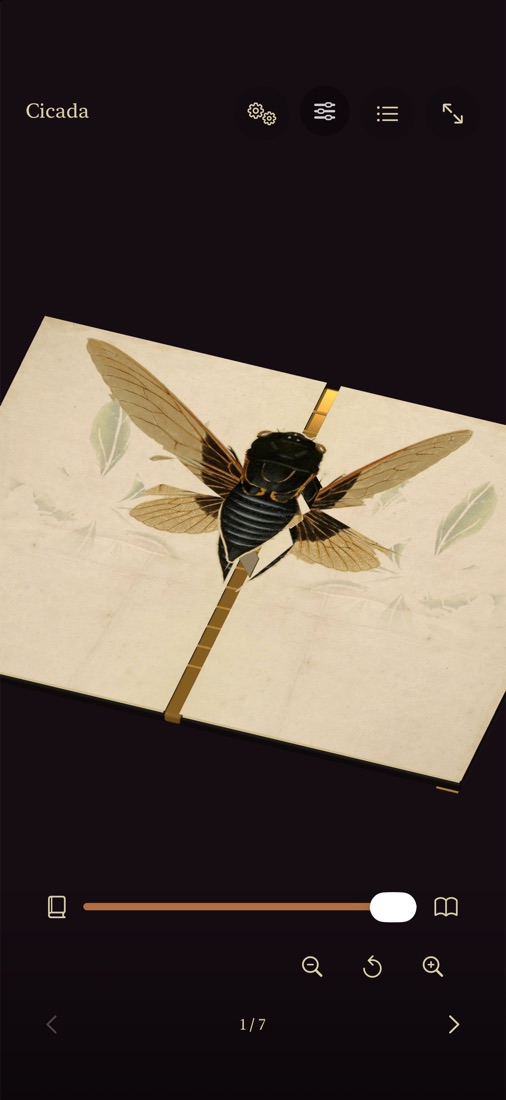
Today the Bestiary's cicada stood up as one real animal. It is cut from a single plate in Edward Donovan's Insects of China, printed in 1838: a black body ringed in gold, wings veined in copper. The pages behind it are a flyleaf from Maria Sibylla Merian's book of 1705, and each insect now has the plant it lives on, faint, behind it. The other six insects are next, each from its own plate, and the paper kits will follow the same pieces.
I am also trying two games on a Playdate, the little yellow handheld with a crank; neither is out there yet. In Lighthouse the crank turns the lamp. The marble game has a new name too: Tachline. The old name, Redline, carries the history of redlining, and we would rather the game be known for the marble and the gauge.
One honest thing. My first try at the plates put old engravings onto shapes made for other art, and the insects came out stitched together. Starting over from the plate, one animal at a time, is slower and it is the only version that looks true.
Sources and thanks
- Edward Donovan, Insects of China (1838), and Maria Sibylla Merian, Metamorphosis insectorum Surinamensium (1705), public domain, scanned by the Biodiversity Heritage Library and the Rijksmuseum. Both welcome a gift.
Notes from the Workshop, once a month: releaf.site/beta/letter